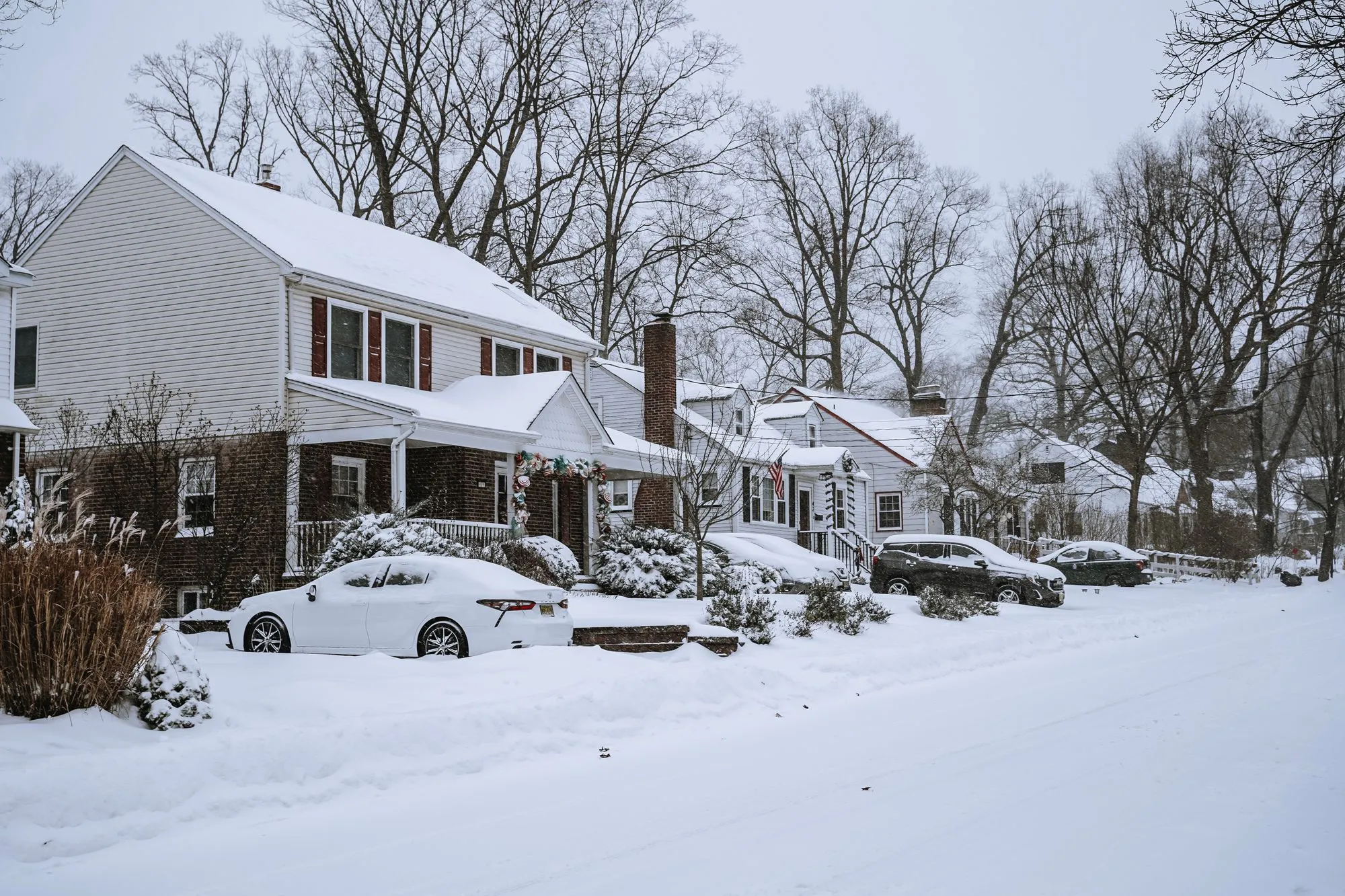
Snow changes the clock, not the deal
A dead car in winter is more urgent than the same car in July. Snow rules kick in, plows need the curb, and a car that won’t move is in the way. The removal itself works the same way: free towing, payment at pickup by cash, Zelle or Cash App, and pickups from 7 a.m. to 9 p.m., every day.
What changes is preparation and timing.
Snow parking rules near our Riverdale lot
Every village we serve has its own rule. Here they are side by side, from each village’s code. The depth that triggers the rule matters most.
| Place | When the rule starts | What it means |
|---|---|---|
| Riverdale | Over 2 inches | No parking on designated snow streets (Indiana Ave 135th to 146th, School St 138th to 143rd, 134th St, 137th St and others) from snowfall until 8 hours after it stops |
| Dolton | During snow removal | No parking 2 to 7 a.m. on designated primary streets |
| Phoenix | Over 1 inch | Only 3-minute passenger and 30-minute freight stops on through and bus streets, until 8 hours after snow stops |
| South Holland | Over 2 inches | Only 3-minute passenger and 30-minute freight stops on any street, until 8 hours after snow stops and through removal |
| Blue Island | Over 2 inches | Designated snow routes off limits until removal is done; violators may be towed |
| Dixmoor | 2 inches or more | No street parking until plows have cleared; cars moved at owner’s expense |
| Merrionette Park | 2 inches or more | No parking on any residential street |
| Calumet Park | Not in the online code | Parking rules adopted by reference; follow posted signs. No shovelling snow into the street |
| Chicago (Altgeld Gardens, South Deering) | December 1 to April 1, any weather | 3 to 7 a.m. ban on 107 miles of designated arterials; a separate 2-inch ban on 500 more miles of main streets |
Two things stand out. Phoenix starts at 1 inch, lower than its neighbours. And Chicago’s overnight ban doesn’t need snow at all; it runs every night from December 1 to April 1 on signed streets. The city’s winter parking page says violators are towed with a minimum $150 towing fee, a $60 ticket and $25 a day in storage.
If the car died on the street
- Find out whether you’re on a snow route. Look for posted signs on the block, or check your village’s list.
- Call right away. We can often come the same day, especially when you call in the morning.
- Don’t wait for the plow. A car blocking a snow route can be moved or towed by the town, and then you’re dealing with a pound instead of a buyer.
If the car is in a driveway or garage
You have more time, but a few things help:
- Clear a path from the street to the car, and clear one end of the car, front or rear.
- Don’t bury it. When you shovel the driveway, don’t pile snow against the car. In Calumet Park you also can’t throw snow into the street, and piles over 3 feet aren’t allowed near corners.
- Check the garage door. A frozen garage door can hold up a pickup.
Frozen in place
A car that’s sat through a few freezes can be stuck: tires frozen to the ground, brakes frozen to the rotors, doors that won’t open. None of these stop a pickup. Tell us on the call so the driver plans for extra time. If the car won’t go into neutral, our guide to moving a car that won’t roll explains the shift-lock release.
Why winter brings out village notices
Winter is when dead cars get noticed. A car that never moves is the one buried under the same snow all week, and it’s the one plows have to drive around. Most villages here call a car inoperable after 7 days (Dolton allows 10), and a stuck car under snow fits that description quickly. Our side-by-side of inoperable car notices in the south suburbs has each village’s clock.
Book it
Use the form on this page or call. A same-day pickup is often possible; our guide to same-day junk car removal explains what helps. The tow from snow is as free as any other; see non-running car removal.